Sustainability first
Reuse is not a theme we decorate with. It decides what gets programmed, who gets a stall and what leaves the site at the end of the day.
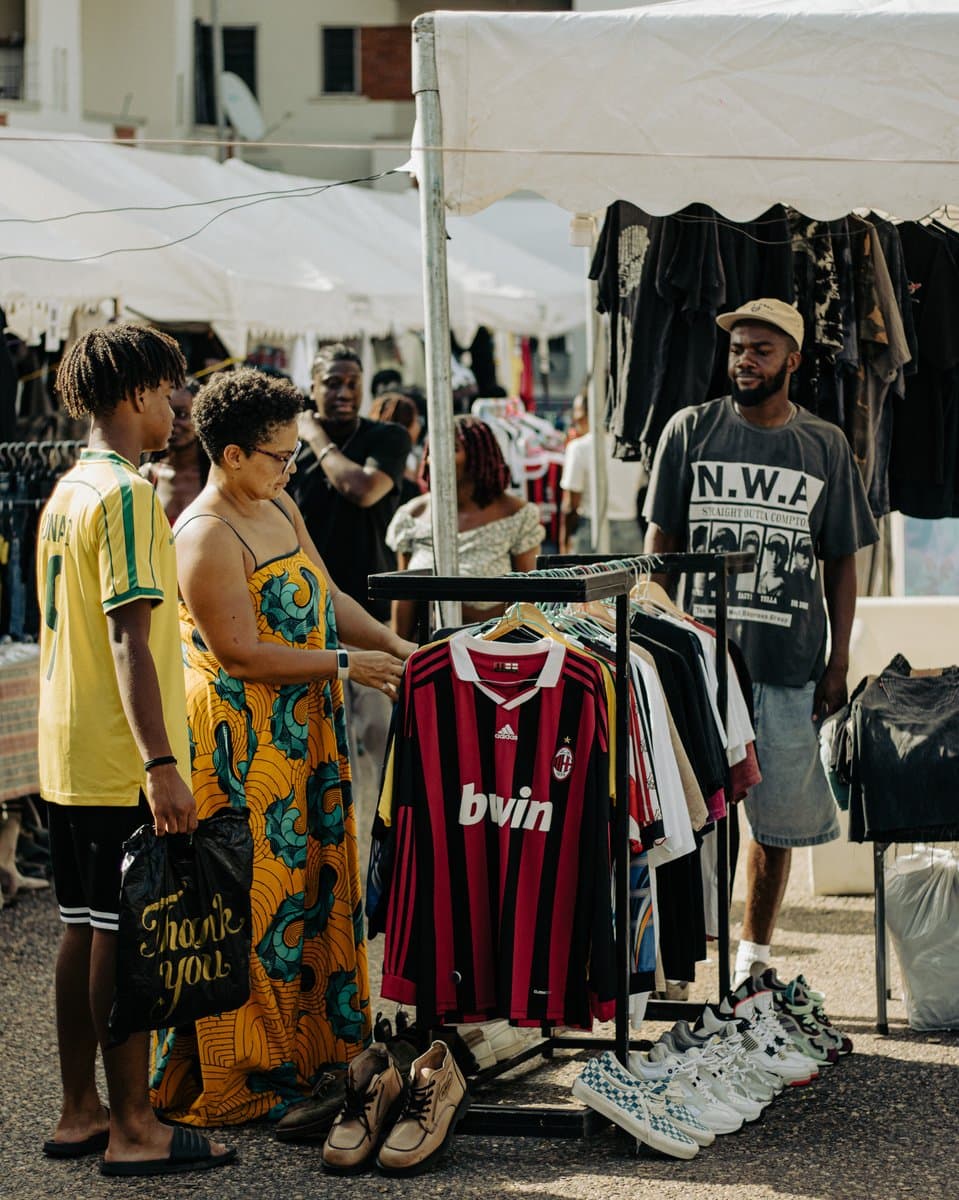
We run the room where Ghana's secondhand trade stops being a problem to solve and starts being an industry to build.
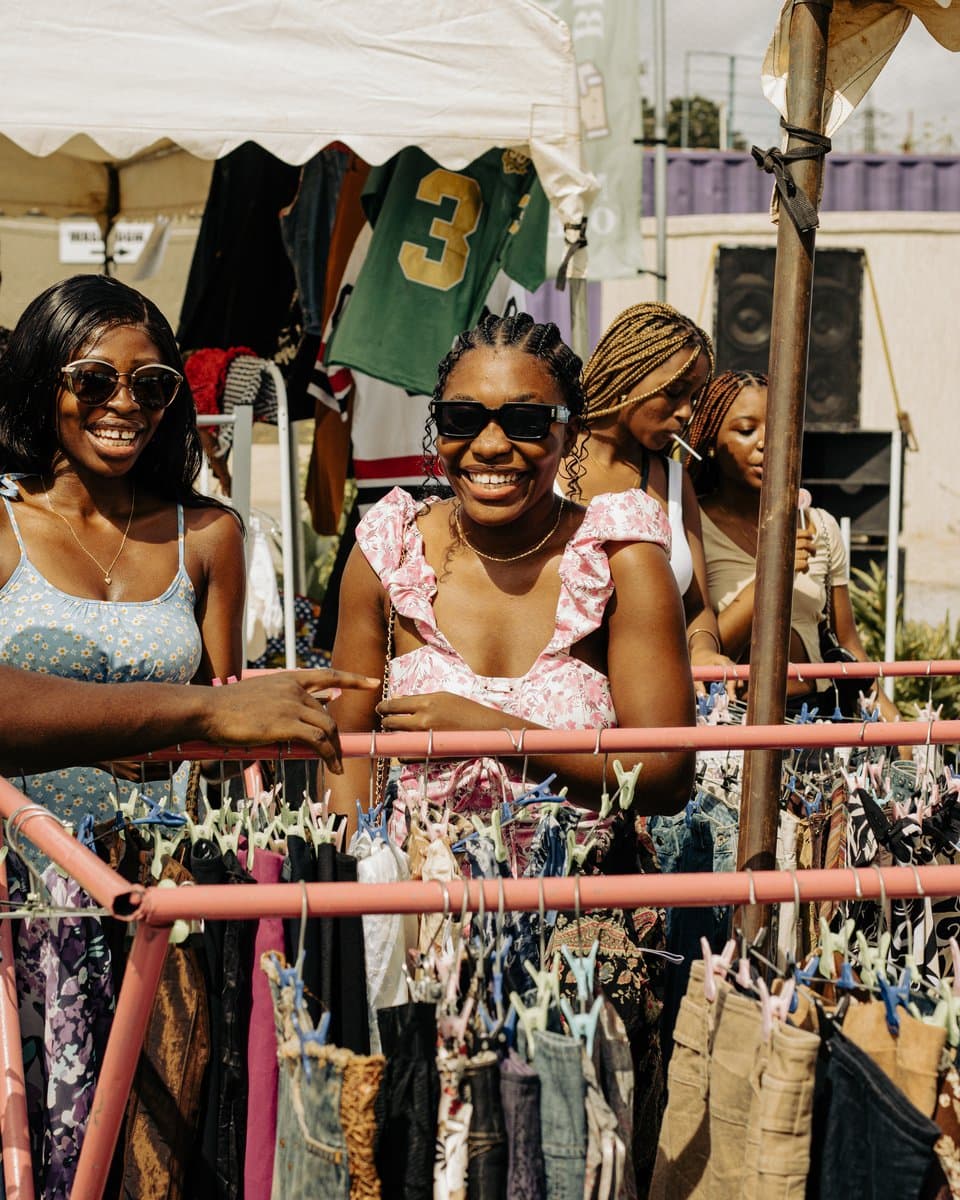
It began as a weekend market for people who preferred a well worn jacket to a new one. A handful of traders, a few rails, a speaker in the corner.
What kept it growing was the trade itself. Accra already moves an enormous volume of secondhand clothing, and the people handling it are skilled: sorters who can date a garment by its seams, tailors who can rebuild a jacket from three dead ones. What was missing was a floor where they could sell directly, at their own price, to people who understood the value.
That is the whole business now. Vendors bring the stock, designers bring the upcycled work, and the day is built to put both in front of the crowd that wants them.
Reuse is not a theme we decorate with. It decides what gets programmed, who gets a stall and what leaves the site at the end of the day.
Traders, tailors, stylists and shoppers built this floor. We keep the entry price low so the people who make it can afford to be in it.
Upcycling turns a damaged piece into a better one. The workshops, the design showcase and the runway all exist to prove that.
We report what we can count: stalls filled, pieces traded, cedis raised. No round numbers that nobody checked.
Vintage Gala is produced by a core team in Accra and staffed on the day by volunteers from across the city: setup, welcome desk, vendor support, photography, cleanup.
If you want to work an edition, the crew application is open ahead of every event and we take people with no prior experience.